CLIENT:
Dasa
YEAR:
2023
EXPERIENCE:
Product Design

Dasa - Sharing resources between teams
about.
Imagine a large healthcare network facing a common yet complex challenge. Different teams working in parallel on similar digital products, building almost identical solutions but reaching very different results. At Dasa, a leading healthcare company in Brazil, this was exactly the scenario. Each team operated independently on hospital admission processes, which led to duplicated efforts, fragmented experiences, and both visual and functional inconsistencies. The challenge was clear: how could we align and optimize these teams?
To solve this chaotic situation, we set out to develop a unified Design System. A powerful platform designed to centralize resources, standardize interfaces, and deliver consistent experiences to users. The idea was simple but ambitious: transform the way teams collaborate by creating a cohesive and efficient digital ecosystem.
my role.
As Product Designer, I mapped team challenges, organized interviews and workshops, and created reusable components. I also conducted usability tests to ensure the solution solved current problems while remaining scalable for the future.
Team
Daniel Alves
Rafael Velosa
challenge.
The lack of a clear standardization strategy led to constant rework, inconsistent interfaces, and a frustrating experience for users moving across different digital hospital products. This scenario not only hurt productivity but also impacted the perceived quality of care.
Products involved in the project
Emergency Room Admission: Patient check-in for emergency departments, requiring extensive data collection.
Surgical Center Admission: Check-in for patients with scheduled surgeries.
CME Admission: Check-in for patients with pre-scheduled consultations.
Among these, I worked directly on the Emergency Room Admission product. In this context, check-in is critical because it ensures patients are properly registered in the hospital system before care begins.
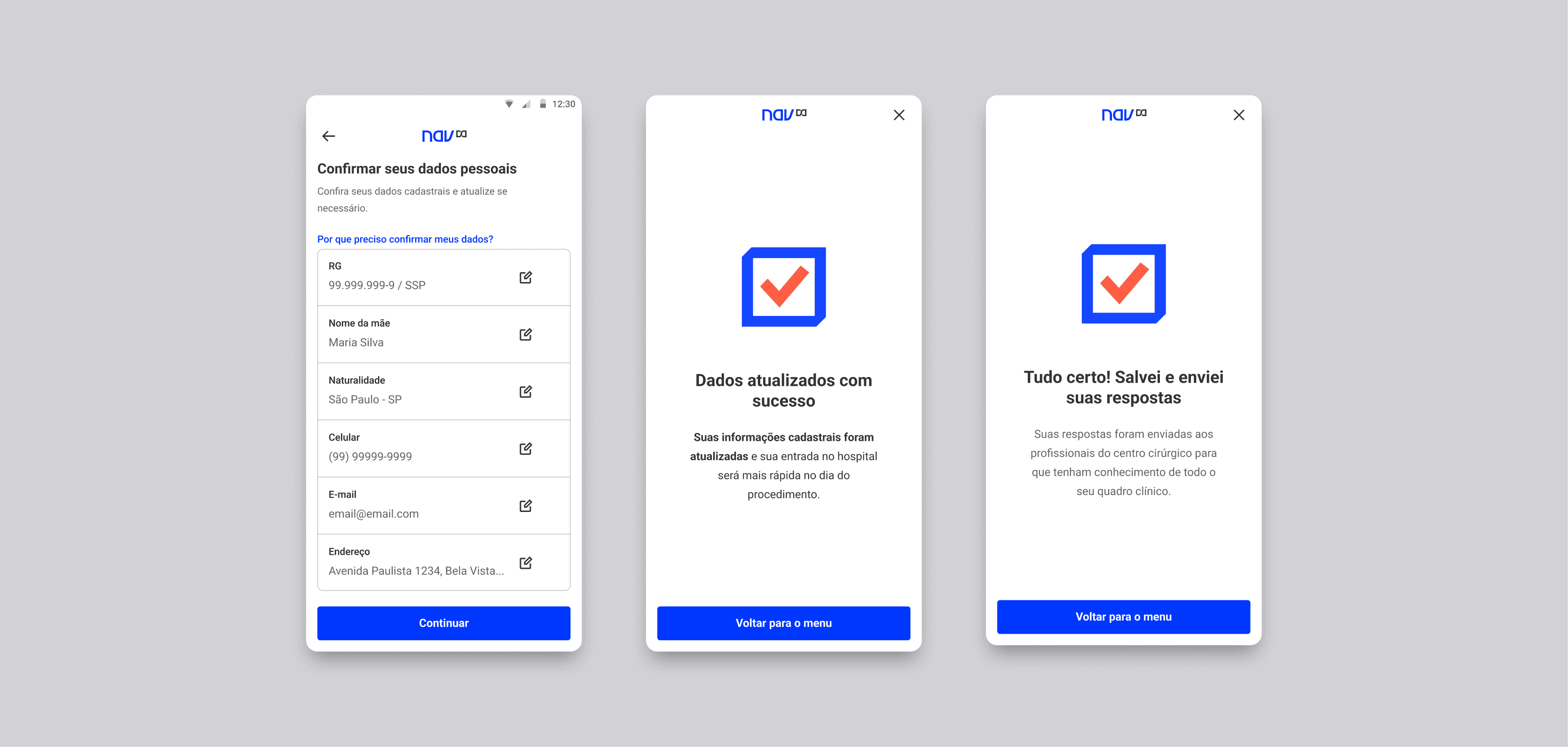
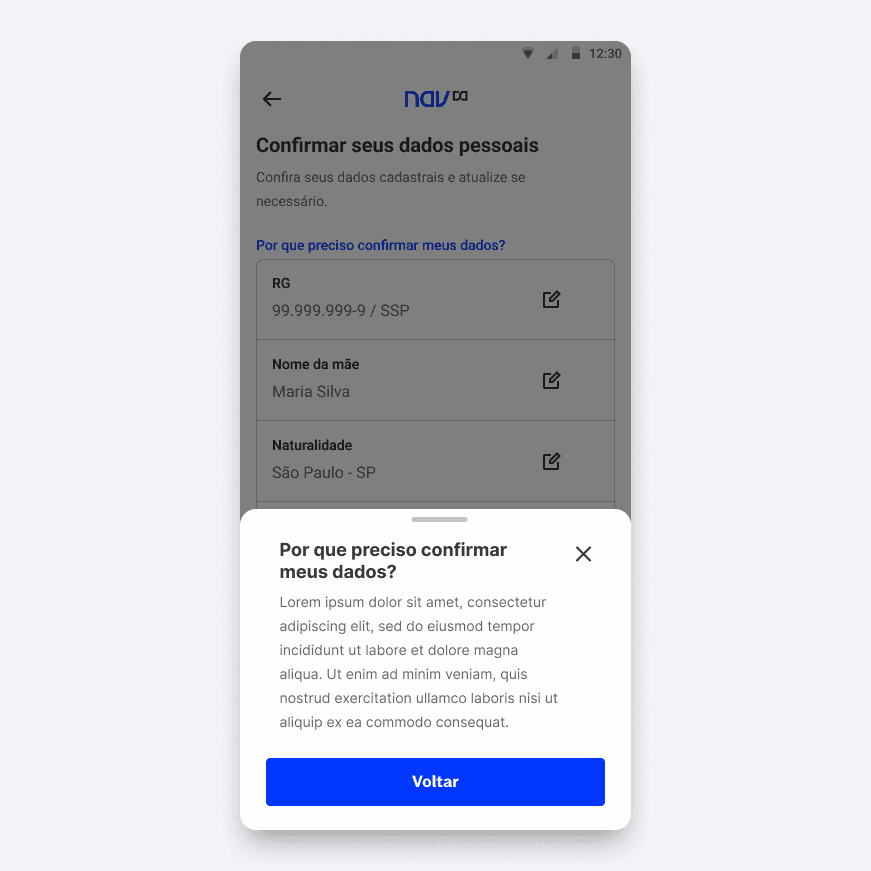
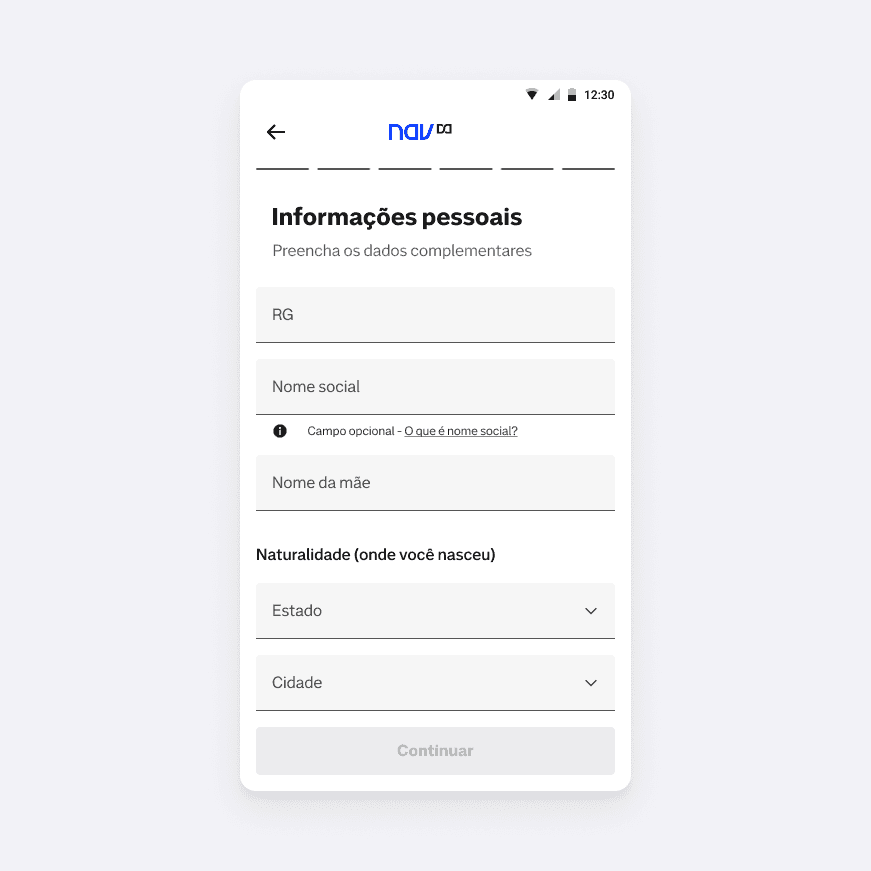
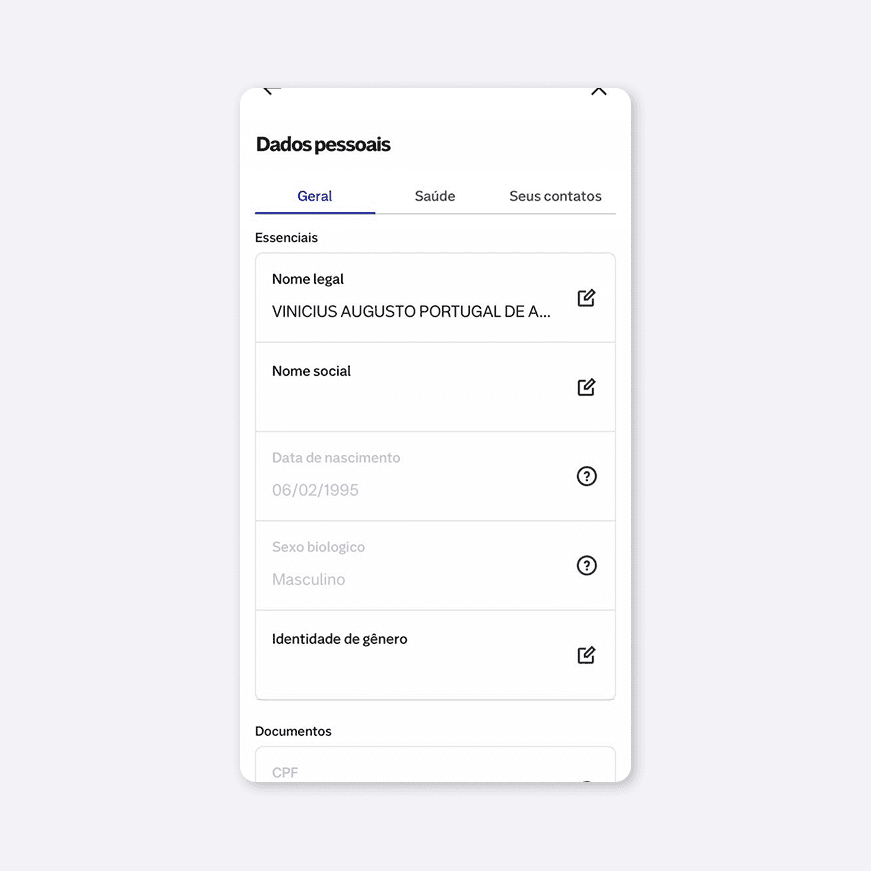
The challenge was that the virtual check-in process required patients to provide numerous personal details and documents, yet each product had developed its own flow and screens for data collection. This created fragmentation, redundancies, and an inconsistent experience across the hospital network.
approach.
We followed the Double Diamond framework to structure the initiative and ensure that every stage of discovery, definition, design, and delivery was intentional and collaborative.
In the discovery phase, we interviewed patients, product managers, and the technology team to understand how fragmented admission flows created inefficiencies and frustration. We analyzed existing check-in journeys and found that patients had to complete long and repetitive steps, often leading to drop-offs. At the same time, engineering teams struggled with duplicated work and inconsistent solutions.
During definition, we cataloged every existing interface and mapped the documentation required across different admission products. This revealed a clear set of common data fields that could be standardized, such as personal information, ID numbers, and contact details. With these insights, we prioritized the critical components that would bring the greatest impact when unified.
In the development phase, we ran collaborative workshops to co-create solutions with designers and engineers. We built unified templates for patient registration, where shared fields were standardized and product-specific fields could be added dynamically. We developed high-fidelity interactive prototypes and tested them with both internal teams and patients, validating usability and identifying opportunities for refinement.
Finally, in the delivery phase, the new components were integrated into the Design System and applied to real hospital products. The outcome was a scalable solution built on four pillars: consistent visual and functional standards, efficient component reuse, seamless user experience, and simplified maintenance across the ecosystem.
results.
The new registration standard improved both user experience and team efficiency. Validation with product teams and real patients showed a 50% increase in virtual check-in conversion. Development time was reduced by 40%, maintenance became simpler through reusable components, and users gained a consistent experience across all products. The Design System also reinforced brand identity and set the foundation for future standardization across the company.