CLIENT:
Stocci
YEAR:
2024
SERVICE:
Product Design

AVM - AI powered real estate valuation
about.
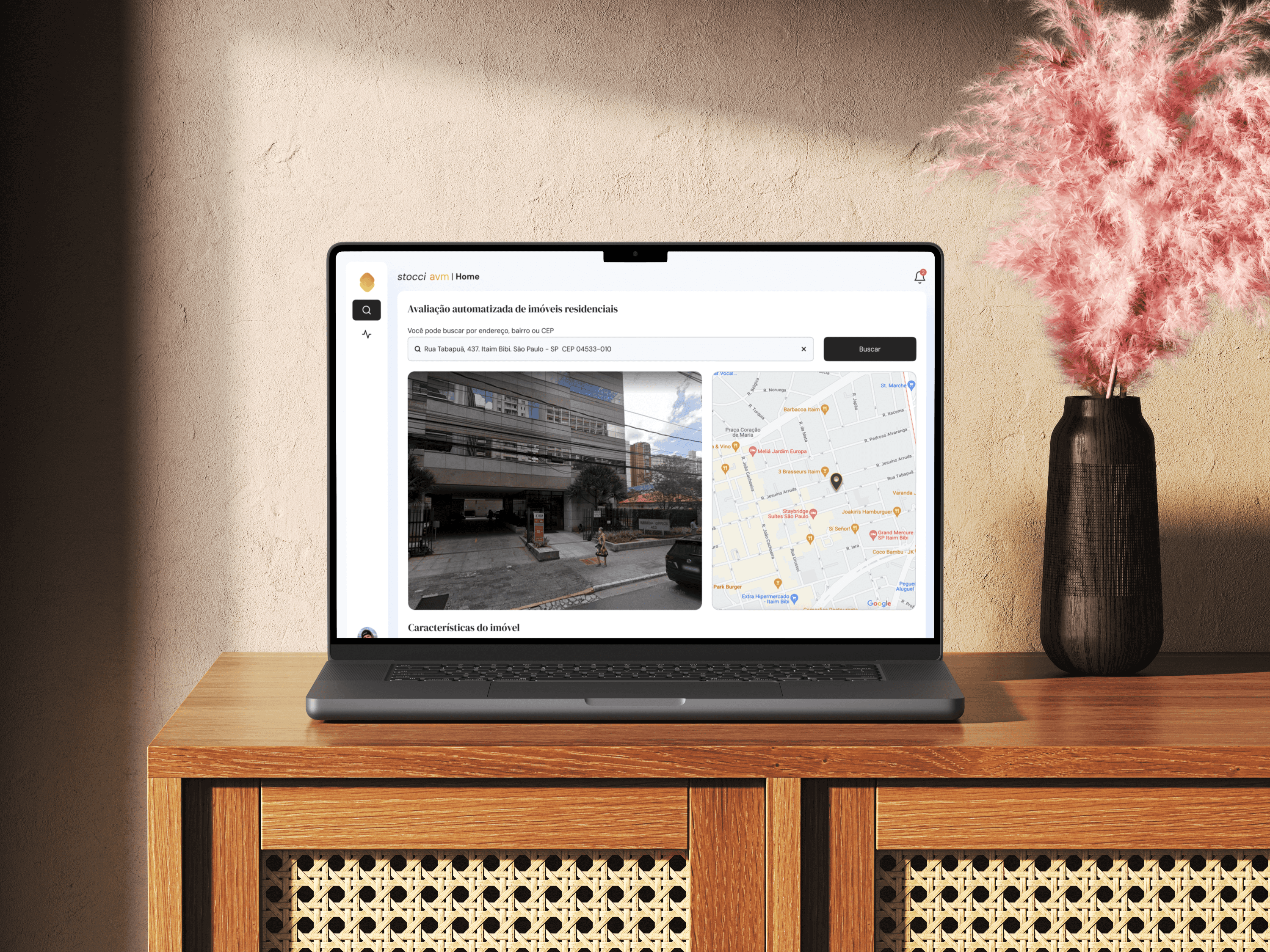
Stocci AVM is a web-based valuation platform that uses artificial intelligence to bring precision and strategy to real estate pricing. Powered by over 5 million property records (by B3) and more than 600 urban data layers, the product delivers reliable residential valuations for broker networks and financial institutions.
For brokers and real estate agencies, it supports portfolio pricing decisions. For banks, it enables faster and safer credit and home equity operations.
As an early-stage startup preparing to close large enterprise clients, Stocci needed to evolve from an experimental product into a scalable, production-ready platform capable of inspiring trust in a highly volatile market.
my role.
As Product Designer, I led the information architecture, user flows, and interface design of the platform.
I worked closely with the Product Manager to define the long-term product vision and a two-year roadmap. I collaborated daily with data scientists, developers, and marketing to translate complex AI outputs into clear, usable, and commercially viable experiences.
I also documented features and handled handoff to engineering to ensure alignment between strategy and implementation.

challenge.
The core challenge was accuracy and credibility in property valuation.
For real estate agencies and brokers, pricing a property correctly is complex. Values fluctuate significantly depending on geographic scale, neighborhood dynamics, comparable properties, and market timing. Without a reliable and data-driven system, valuations often rely on fragmented data or subjective judgment. This creates risk in negotiations and makes it difficult to maintain a well-organized, transparent property portfolio with instant access to structured insights.
For banks, the stakes are even higher. A property valuation directly impacts credit approval and home equity operations. Without a trusted and validated method to assess property value as collateral, financial institutions face strategic loss, slower operations, and increased risk exposure.
Stocci AVM needed to bridge this gap by transforming complex, large-scale data into trustworthy and actionable valuation intelligence.

approach.
To address the valuation complexity and credibility gap, we focused on structuring clarity around data, logic, and decision-making.
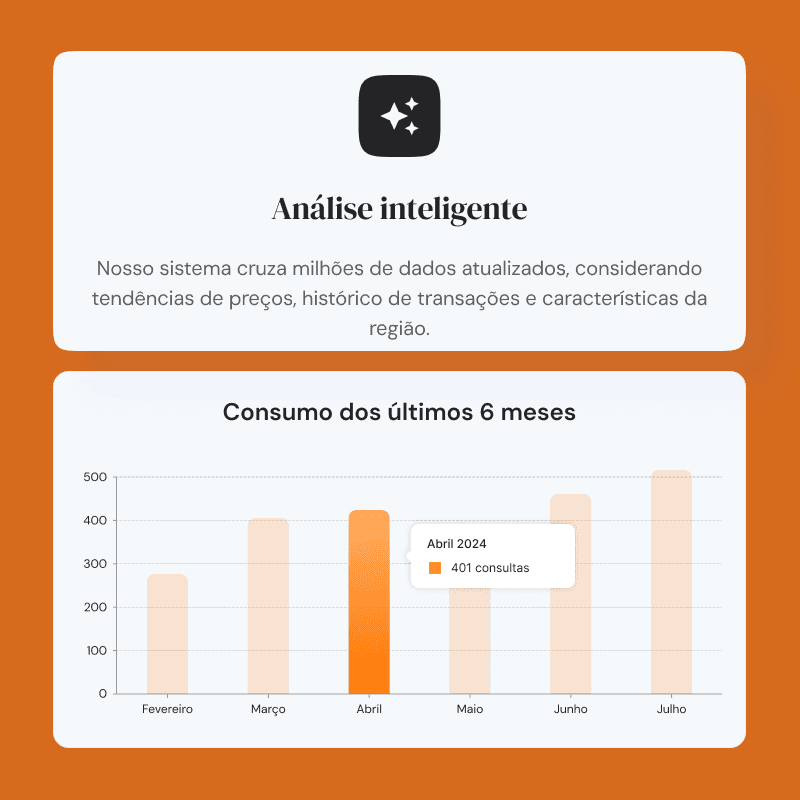
The first step was redesigning the information architecture to reflect how brokers and credit analysts actually think about property value. Instead of exposing raw data layers, we organized information into structured valuation insights, highlighting the most relevant signals while keeping supporting data accessible.
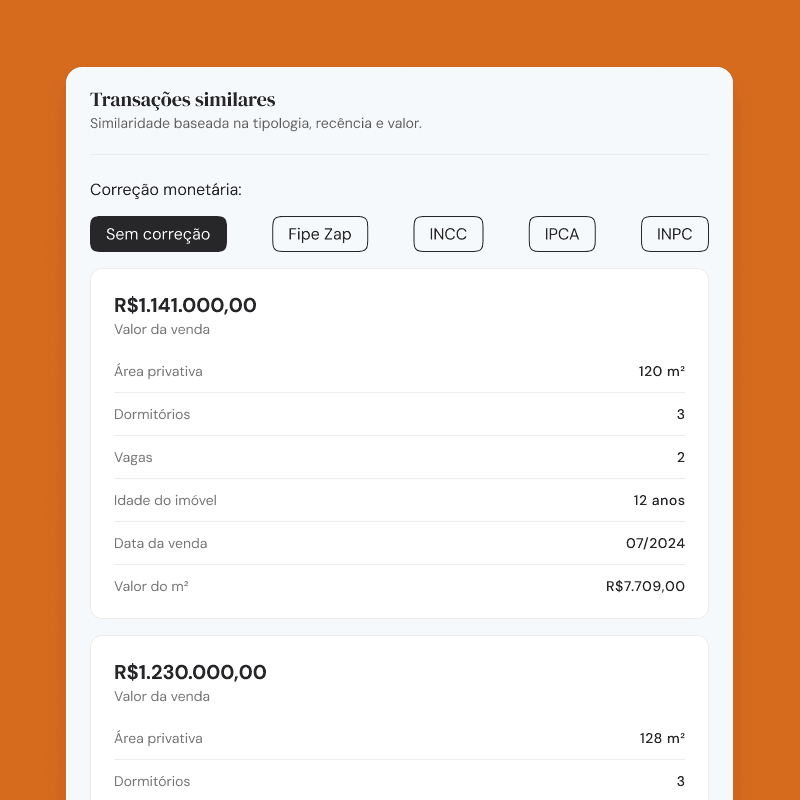
Working closely with data scientists, we defined how AI outputs should be presented to increase transparency and confidence. The goal was not only to show the final price estimation, but to communicate the reasoning behind it. We emphasized comparables, regional context, and model indicators in a way that felt analytical rather than opaque.
For broker networks, we designed portfolio management views that allowed instant visibility across properties, making it easier to track, organize, and reassess assets over time.
For banks, we prioritized structured reporting and validation flows that aligned with credit risk analysis standards, ensuring the platform could support financial decision-making at an enterprise level.
Throughout the process, I collaborated with product and engineering to build a scalable foundation that could support future roadmap features, ensuring that design decisions aligned with long-term product strategy.
Every design choice centered around one principle: transforming complex AI-driven data into trusted, actionable intelligence.
results.
The platform positioned Stocci AVM as a credible and enterprise-ready AI solution in the real estate valuation market.
The improved clarity in valuation logic and portfolio visibility contributed directly to closing new clients, including a major bank, a large real estate developer, and multiple broker networks.
For brokers and agencies, the platform enabled more consistent pricing decisions and better portfolio organization, reducing uncertainty in negotiations.
For financial institutions, it provided a structured and defensible method to assess property value as collateral, supporting faster and more secure credit operations.
Beyond commercial impact, the product gained stronger differentiation in a competitive market by transforming complex data into transparent and actionable intelligence.
This work was also developed in partnership with Google Cloud and published as an official success story on their platform.